

Back
June 19, 2026 | Bill Zinn
SKEPTICS, PART I
Why do we need to know that?
Faith and Skepticism. An odd combination by most standards, and yet I like the idea of both. Let me digress for a moment: on January 6th, 2004, an odd combination of strong Santa Ana winds and a sudden light rain resulted in “raining mud” in the San Diego area (did any of you wonder why your car was so dirty the next morning?) The following morning, January 7th (really?) it was 81 degrees at 9:00 AM at John Wayne airport after dropping to only 70 degrees the night before. Even in Southern California that is rare indeed for this time of year. That evening in North Bend, Oregon, the line at the Kentucky Fried Chicken franchise extended out the front door and the wait to order was nearly a half an hour. I had the personal experience of witnessing all three of these events, and it struck me as a perfect time for some “Chicken Little” to step forward and proclaim that the sky was falling. Such portent, such opportunity, I thought, but no prophet stepped forward to announce our impending doom. Oh well. In retrospect I suppose that was a good thing, considering that exactly one week later the world appears to be back to normal. We are consigned once again to the mundane and repetitious in our news; “wars and rumors of war”.
This little tripartite observation of mine was primarily humorous to me, but it caused me to think further regarding all of the “doomsayers” I have listened to in the course of my life. I recall that in the sixties there was a growing movement among evangelical Christians to push the idea of the immediate return of Jesus and the judgement of the world for its folly. This movement produced a large volume of articles, books, and sermons regarding a relatively narrow perspective on “end of the world” prophecy. The impact of these are still visible in our world today, including bumper stickers warning of unmanned vehicles, and an entertaining, though flawed, series of novels about the “Second Coming.” I still vividly recall many sermons wherein a passionate, sweating preacher blistered his faithful congregation with warnings of the impending doom about to befall the unsuspecting world. In all of this I must admit a certain irreverence on my part, as I pictured a sea of believers pouring from the doors of their churches on Sunday, at the stroke of noon, wagging their fingers at the world and proclaiming “you’ll all be sorry when Jesus comes back, you sinners.”
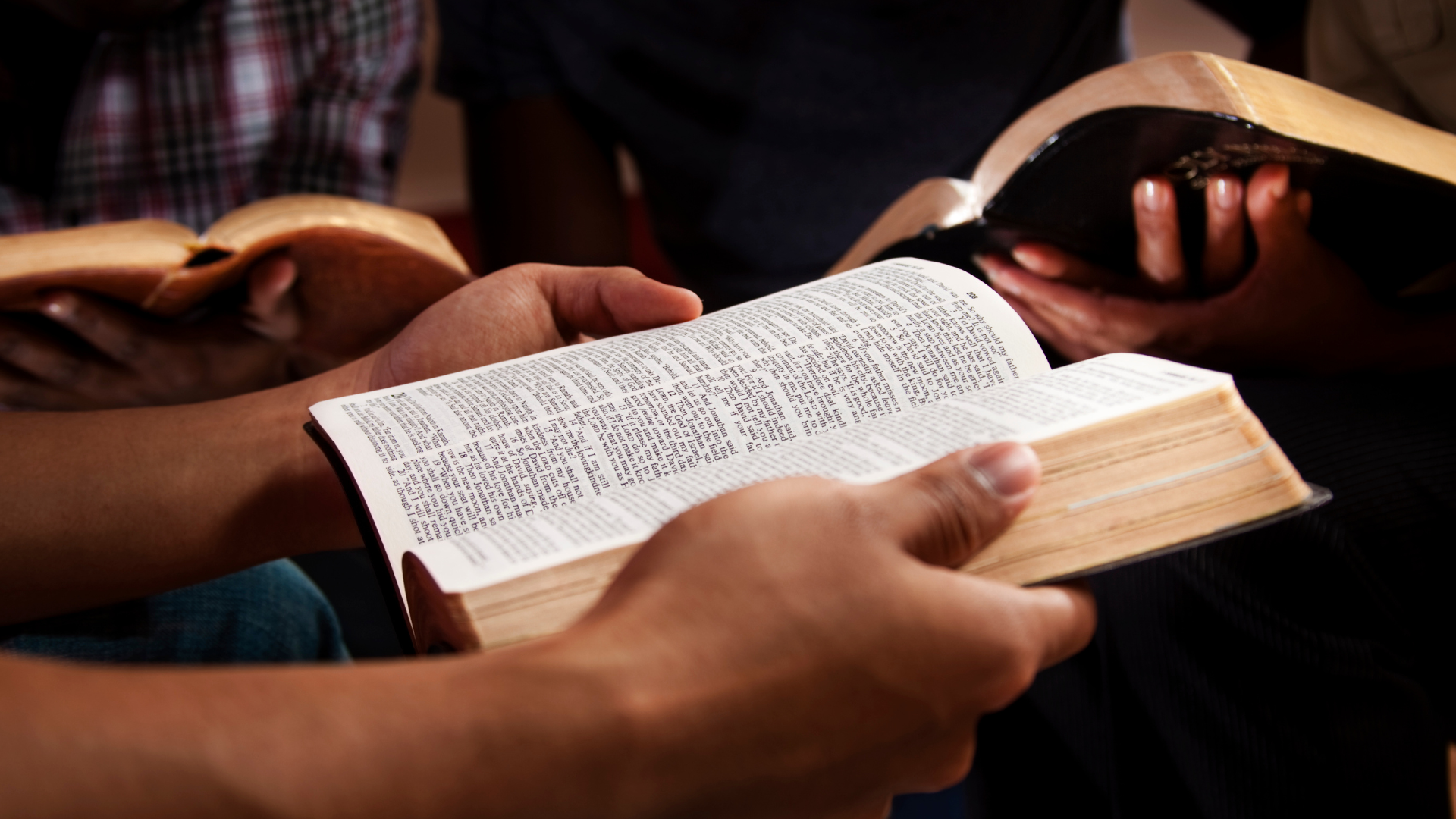
Here lies the error in all of this: People have tried to put the Bible and its prophecy to work for them. In their all too brief readings of scripture they see something which fits their limited world view and adopt it for their cause, rather than seeing scripture in its entirety as a force which adopts them to its’ cause. When Jesus was standing in front of the great Temple in Jerusalem with his disciples he said “many will come in my name, saying ‘I am the Christ,’ and will mislead many.” (Matt. 24:5) He continued in this passage to indicate that many ominous events will take place including the already mentioned “wars and rumors of war,” but observed that these things “must take place,” and that they are not to be assumed to be the end of things. The real point He was pushing was to be wary of anyone claiming to be the bearer of apocalyptic absolutes (someone saying the end is coming and that he has proof.) He was telling his disciples to be skeptical yet adhere to the authentic principals of the kingdom which He taught them, and in doing so be among those who “endures to the end,” resulting in salvation. (v. 13, para.)
Sometimes we become so caught up running from here to there in our minds, or trying to always be where the action is, that we fail to see the real weighty moments of our own history. For some it means being so fixated on the moment of Christ’s return that all else in life is of no matter. They become nonfunctional in their anticipation. For others it means becoming cynical and jaded, thinking the whole thing is just a hoax to keep people coming back to church. Either way, the enemy wins. Yet there are great, defining moments in our recent history, and some, I suspect, yet to come. We are not to put any of these on the floor as irrelevant simply because they have not or do not bring about the immediate return of Jesus.
Here’s a little history lesson that might serve to further clarify my point. Though there were at least several glaring events in the history of the last century which might be deemed significant, such as the bombing of Hiroshima and Nagasaki, or the annexing of a large portion of eastern Europe into the Soviet Union, or even the dissolution of the Soviet Union, I see one as perhaps the most significant. On the evening of 9 to 10 November, 1938, one of the most ominous moments of the Twentieth Century occurred. Known as “Reichskristallnacht,” or “The Reich Crystal Night,” German citizens rose up against their neighbors, Jewish citizens, dispossessed them of all their property, killed many, and began one of the most evil programs of genocide the world has ever witnessed. All of us have heard of the Holocaust and the evil perpetrated against the Jewish race in Europe, and we are horrified at it, yet we don’t necessarily interpret it as significant in our lives. After all, we’re not Jewish nor are most or all of our friends. As a result we turn a blind eye toward an immense history of anti-Semitism and its growth in our world today.
Now, I used this example of a moment in history to demonstrate how we arbitrarily interpret it for our own purposes. Some of you are saying to yourselves, “its still just history, what significance does it have on my life?” My reply, then, would be “its history if we persist in remembering it, and it’s prophecy if we forget it.” Every generation manages to perceive itself as somehow more significant that those it followed, as if they were somehow above all the moral atrocities and reproaches of the past. This is a tendency that humanity must always struggle to overcome; yet when coupled with a deliberate ignorance of the past, those events that have been forgotten or ignored as insignificant are destined to be repeated. If you think about it, the point of prophecy in the Bible was always to evoke a behavioral change in those who heard it, not simply to condemn them. If the audience heard and relented from the behavior, which God was judging, then he would take notice and relent of his judgment of destruction or exile. And if you think further, most of the intended audience either ignored it or refused to listen, treating the message with contempt, and consequently were doomed to experience the prophetic judgement. But in no sense did God ever intend for those who heard it to run off in a dither telling the rest of.
Kicking this up one more notch, what is it that God wants from us then? Did I mention already that scripture is not a tool we employ for our own goals, but instead is a force, which employs us towards its end? For those of you fortunate enough to regularly hear Ed Noble preach you already have the answer. In one of his sermons he emphasized that Jesus wasn’t asking you to “fit him in,” nor was he looking to “join you” in your personal endeavors. Instead he is looking to “take over” your life. Sounds tough, but it gets even tougher. While many of us may claim that we have turned our lives over to Jesus, He will turn this claim back around on us and say “oh yeah?” What about “this” and “that” which you still hold on to, assuming that God won’t notice? Each of us has something outside of our relationship with God which furthers our definition of ourselves, and when held onto tightly becomes our idol, our second god. God is not a “nice guy” who will understand, and he is not our personal genie whom we can use to fix all the broken stuff in our lives. He doesn’t work for us. We are to work for him. He is to be our only master.
"More on Skeptics in the next installment."
-BillZ